Everyone says "get tested regularly," but almost nobody explains what testing actually involves. What do they swab? Does it hurt? How long after a risky night should you wait? And why does a negative result sometimes not mean what you think it means?
This is the practical guide: the how, not just the why. No scare tactics, no shame, just clear answers so you can walk into a clinic (or open an at-home kit) knowing exactly what to expect.
In this article
Why testing is the only way to know
Here's the single most important fact about STIs: most of them have no symptoms at all. You can carry chlamydia, gonorrhea, or HIV for months (sometimes years) and feel completely fine. No itch, no pain, no warning sign. If you're waiting to "notice something" before you test, you could be waiting a very long time, and unknowingly passing an infection along in the meantime.
That's why testing exists. It's not a sign that something is wrong; it's just the only reliable way to actually know your status. Think of it the way you think of a dental check-up: routine maintenance, not a verdict. If you want the fuller picture of which infections are out there and how they behave, our guide to the basics of sexual health walks through each one.
What a test actually involves
People often imagine STI testing as some elaborate, uncomfortable procedure. In reality it's quick, usually painless, and depends entirely on which infections you're testing for. There are really only a handful of sample types, and most tests use just one or two of them.
Urine sample
You pee into a cup. That's it. A urine sample is the standard way to test for chlamydia and gonorrhea (genital infections), and often trichomoniasis and Mycoplasma genitalium too. Tip: try not to pee for an hour or so beforehand, since a recent flush can dilute the sample.
Blood draw (or finger-prick)
A small blood sample is used for the infections that travel in the bloodstream: HIV, syphilis, and hepatitis B (and hepatitis C, if relevant). It's usually a quick draw from your arm, or sometimes just a finger-prick for rapid or at-home tests. It takes a few seconds and is over before you know it.
Swabs
A swab is a soft, cotton-bud-style tool used to collect a sample from a specific site. Depending on the kind of sex you have, swabs may be taken from:
- Genital swabs (vaginal, or from the tip of the penis): often used for chlamydia, gonorrhea, trichomoniasis, and Mycoplasma. Vaginal swabs are frequently self-collected, which many people find more comfortable.
- Throat swabs: for chlamydia and gonorrhea picked up through oral sex. A genital-only test will miss a throat infection entirely.
- Rectal swabs: for infections from anal sex. Like throat swabs, these are easy to skip and easy to self-collect.
Swabs can feel slightly odd for a second, but they're not painful. The whole appointment, sample and all, is usually quicker than your coffee order.
Window periods: the crucial bit
If you remember one thing from this article, make it this. A window period is the gap between when you were exposed to an infection and when a test can reliably detect it. Testing inside that window can produce a negative result even though you do have the infection, because there isn't yet enough of the virus, bacteria, or antibodies in your body for the test to pick up.
This matters enormously. A "clear" result taken two days after a risky encounter is not reassurance; it's a result taken too soon to mean anything. People get false peace of mind this way all the time.
Here are rough, approximate windows. Treat them as guidelines, since they vary by the specific test used and from person to person:
- Chlamydia and gonorrhea: roughly 2 weeks.
- HIV: about 2 to 4 weeks for modern antigen/antibody (4th-generation) tests, though full reassurance can take up to around 3 months depending on the test.
- Syphilis: roughly 3 to 6 weeks (sometimes longer).
- Hepatitis B: around 6 weeks, give or take.
Because of all this, the timing of your test is just as important as taking it at all. If a specific exposure is worrying you and it happened recently, it's often worth testing now and testing again after the relevant window has passed, rather than treating an early result as final.
Where to get tested
You have more options than you might think, and the "best" one depends on your situation, budget, and how much privacy or speed you want.
Your GP or family doctor
Convenient if you already have a relationship with them, and they can fold STI testing into a wider check-up. The trade-off: a general practitioner may order a more basic panel and might not automatically think to do throat or rectal swabs. If you go this route, be specific about what you want (more on that below).
Sexual health or GUM clinics
These are specialist clinics (often called GUM, sexual health, or STI clinics depending on your country) and they are frequently the best option. The staff do this all day, every day, so nothing you say will surprise them. Testing is often free or low-cost, they're set up to do extragenital swabs as a matter of routine, and they can usually treat you on the spot if something comes back positive. If you have a choice, a dedicated clinic is hard to beat.
At-home test kits
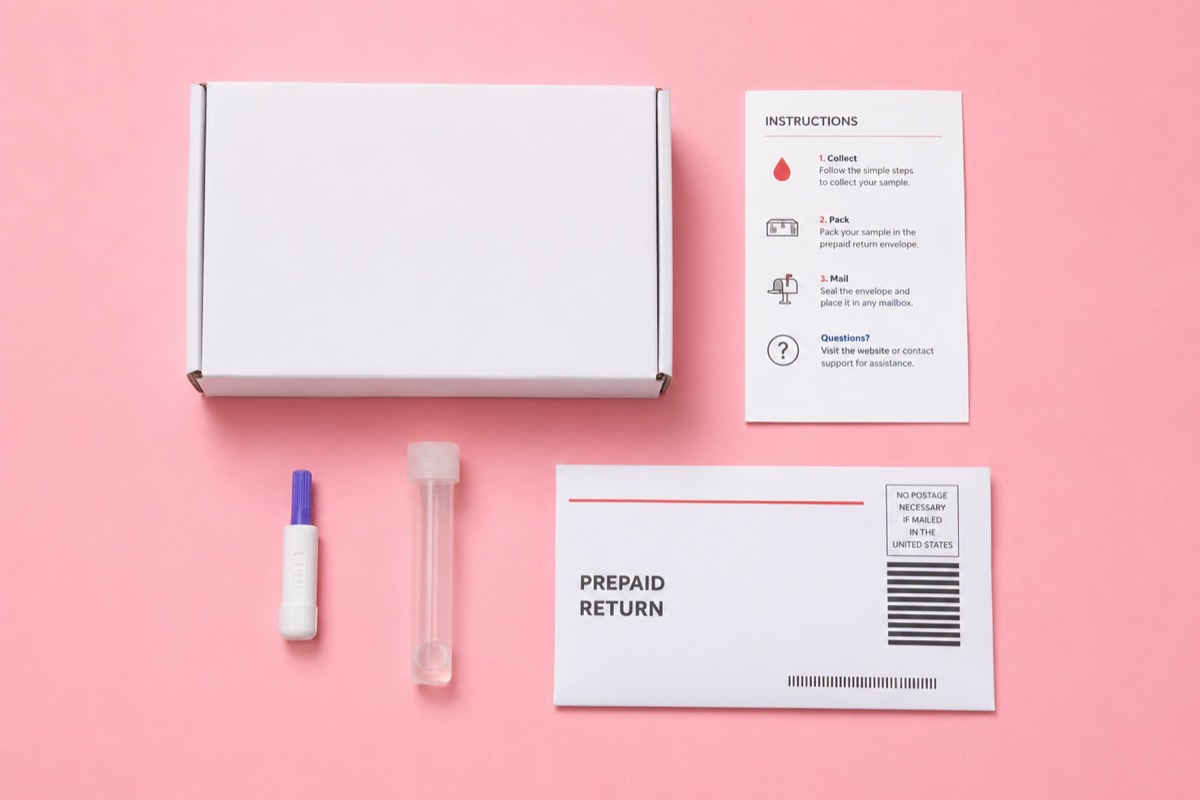
These have made testing far easier. You order a kit, collect your own samples at home (a finger-prick of blood, a urine sample, and/or self-swabs), then mail it back to a lab and get results, often through an app or website. The upsides are obvious: total privacy, no waiting room, and you can do it on your own schedule.
The trade-offs: you have to collect the samples correctly yourself, and a positive result still means a trip to a clinic or doctor for treatment. Some infections (and some extragenital sites) aren't always covered by every home kit, so check exactly what a kit tests for before relying on it.
What to actually ask for
This is the part nobody tells you, and it's where a lot of testing falls short. A "standard," "routine," or "full" STI test often does not cover everything you might assume it does. Depending on where you go, the default panel may:
- Skip herpes entirely (blood tests for herpes aren't routinely recommended for people without symptoms, and are usually only done on request or when sores are present).
- Test only your genitals, missing infections in the throat or rectum from oral or anal sex.
- Leave out newer additions like Mycoplasma genitalium.
The fix is simple: ask for testing based on the kind of sex you actually have. If you have oral sex, ask for a throat swab. If you have anal sex, ask for a rectal swab. If you're worried about a specific infection, name it. You're allowed to be specific, and a good clinician will welcome it.
This is exactly where Play Safe helps. The app looks at the activities you've logged and gives you personalized test advice: which STIs to test for and which sample types to request, matched to your actual situation, so you don't have to memorize any of this or hope the default panel covers you.
Understanding your results
Results usually come back within a few days (sometimes minutes for rapid tests). Here's how to read them without spiraling.
A negative result
Good news, with one caveat: a negative result only covers what you were tested for, and only if you tested outside the window period for any recent exposure. If you tested too soon, or didn't get every relevant sample type, "negative" is less complete than it sounds. When in doubt, check whether a retest is worthwhile.
A positive result
First: don't panic. A positive result is information, not a catastrophe. The great majority of STIs are easily curable: chlamydia, gonorrhea, syphilis, trichomoniasis, and Mycoplasma are all cleared with a course of antibiotics. The ones that aren't curable (like HIV and herpes) are very manageable with modern medicine, and people living with them lead long, healthy, normal lives.
The next steps are straightforward: follow the treatment your clinician gives you, finish the full course even if you feel fine, and avoid sex (or use protection) until you're told it's cleared. You'll usually also want to think about telling recent partners so they can get tested too. That conversation is easier than it sounds, and we walk through exactly how to do it in our guide on how to disclose an STI. (Some services, including Play Safe, can help you notify partners anonymously.)
How often to get tested
There's no universal answer, and anyone who gives you a single number for everyone is oversimplifying. The right cadence depends on your personal situation:
- How many partners you have, and how often that changes
- How consistently you use protection
- The types of sex you're having
- Whether you or your partners have other partners
For some people, once a year is plenty. For others, every few months makes sense. The point is to match your testing rhythm to your actual life, not to a generic rule. Play Safe works this out for you, giving a personalized testing cadence based on what you log, and it folds into the bigger picture of your safety score so you can see where you stand at a glance.
The takeaway
Testing isn't scary once you know how it works. It's a urine sample, a quick blood draw, and a swab or two, chosen to match the sex you have. Mind the window periods so an early negative doesn't fool you, ask for the specific tests you need rather than trusting the default, and remember that a positive result is something you can almost always sort out quickly.
Knowing your status is one of the kindest, most confident things you can do for yourself and your partners. Now you know exactly how to go get it.
Track your sexual health with Play Safe
Log your activity, track your tests, and get a personalized safety score. All privately on your device.